


Getting the Starting Size Right
Buy-to-Fly and Nesting
Buy twenty pounds, fly one. Often machined titanium part start as a rectangle and end as a contoured shape. Everything between the two typically results in machined chips. On aerospace structural work, the ratio of what gets bought to what ends up flying commonly runs near ten to one, and on complicated parts it reaches twenty to one.
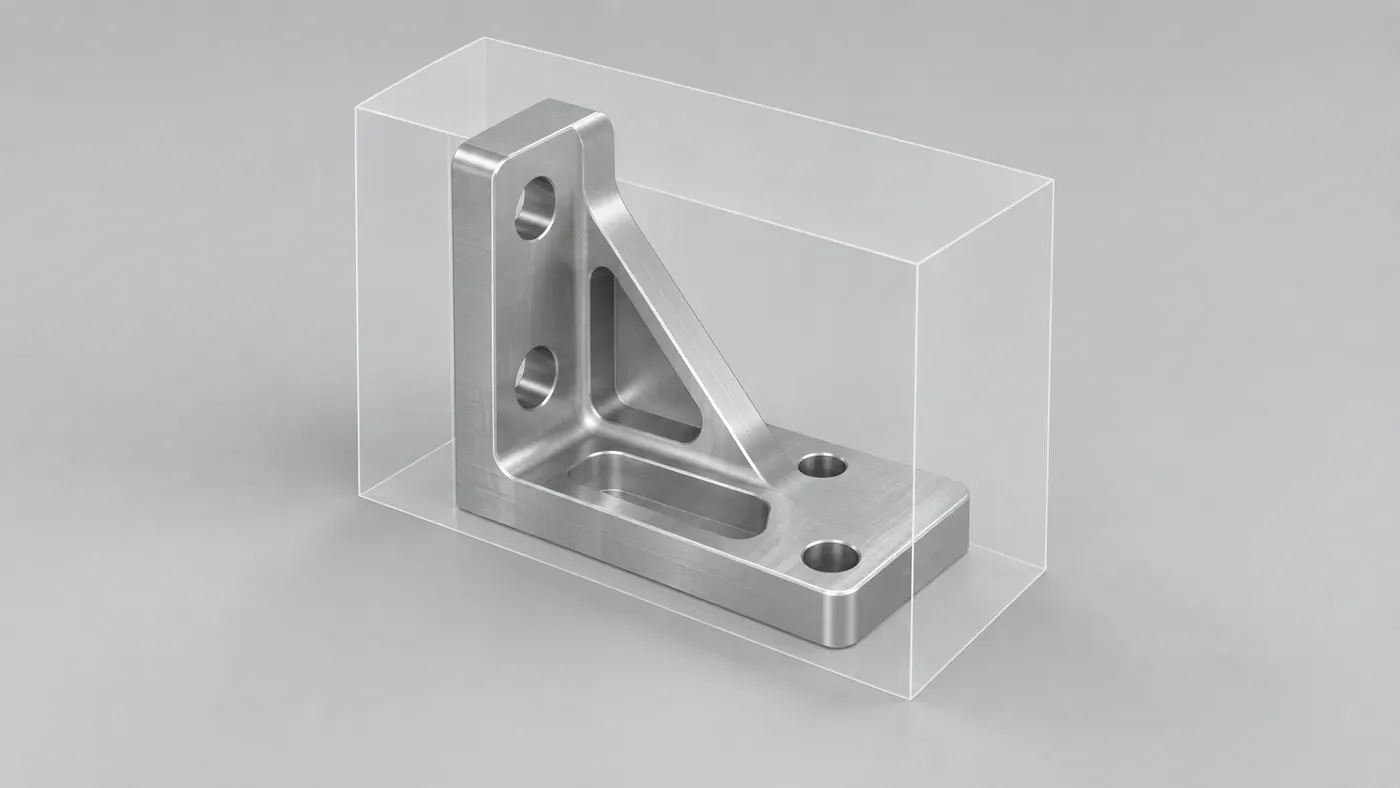
The industry calls that buy-to-fly.
Why the ratio is so variable
Geometry determines the spread. Pockets, ribs, and thin wall sections all mean a large share of the blank was only ever there to be removed. A pylon fitting sits near the top of that ten to twenty range. A clip or a connector sits near the bottom. That comes with the drawing, before anyone orders material.
The rest comes from the blank, and several things go into that.
- Design stage. Early on, in development and low-rate production, parts are often machined from plate prior to transitioning over to closed-die forgings once the part is finalized.
- Part envelope. The space the finished part occupies, plus the stock a machinist needs to hold it and clean it up.
- Plate footprint. How the envelope sits inside the plate, and what falls away at the edges.
- Gauge. The thickness ordered against the thickness the part requires.
- Nesting. Whether several parts share a plate, and how the leftovers land.
- Fixturing. Material that exists only to be clamped.
- Finish allowance. Stock left for surface conditioning, flatness correction, and inspection.
The design accounts for some of those and the machine shop for others. Gauge, width, and length get decided when someone writes the order.
Why standard sizes are the default
Standard plate sizes exist for good reasons. They roll efficiently, they stock predictably, and a shop running many different parts through the same material gets real value from one size that covers most of them. For a lot of work that is the right call.
The arithmetic changes when one part, or one family of parts, runs at volume. Then the same shape is coming out of the same oversized rectangle every time, and the waste repeats with it.
What the numbers mean
Take a plate one inch thick, 36 inches wide, and 96 inches long. Ti-6Al-4V runs about .160 pounds per cubic inch, so the plate weighs roughly 553 pounds. Bring each finished part closer to the actual required machining dimension instead of the catalog and the weight follows. In the table below, you can see the benefit of custom plate, reducing waste, excess and obsolete inventory and unnecessary machining time – all by ordering a custom plate to the near net or nested size.
Weight of the starting plate, same part
Ti-6Al-4V at .160 lb per cubic inch. Illustrative.
Gauge moves the number fastest. Thickness applies across the whole footprint, not one edge.
Six inches off the width takes out 17 percent. Six more off the length brings it to 22 percent reduction prior to taking into account the customization available on the thickness. To articulate this, the last two rows are gauge. Thickness applies across the whole footprint rather than one edge, so it moves the number faster: two tenths of an inch off a plate this size removes more weight than cutting half a foot off the length.
Gauge is often overlooked as a potential for customization, particularly when dealing with standard sizes. However, this becomes another variable that can drive cost and waste out of part manufacturing.
What a sized blank does
A blank sized to the part does two things:
- The part sits closer to the blank. Less material between the finished shape and the edge of the plate means less to cut away, and a nearer net starting point is easier to reach on a plate rolled to suit the part.
- The plate can also be sized to yield a whole number of parts. A standard sheet that yields seven and a half parts carries half a part’s worth of drop that was bought, shipped, handled, and never used. Sizing for the multiple takes that out.
What the extra weight costs
The number on the quote is the acquisition cost. What the material costs by the time the part is finished is a different number.
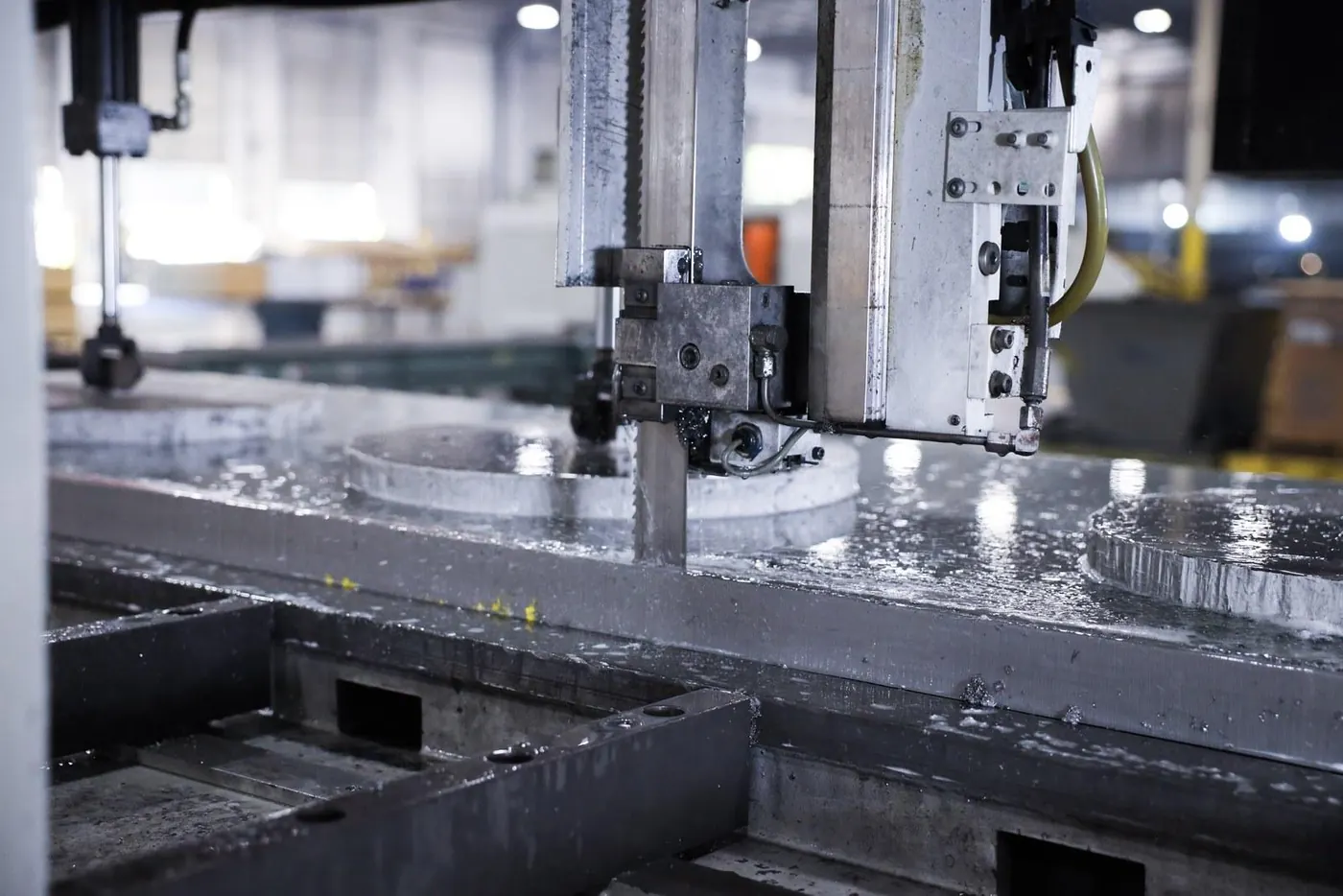
- Machine time. Titanium holds heat at the cutting edge instead of carrying it away, it work hardens, and it keeps its strength at temperature. Every cubic inch that comes off costs spindle time and tool life.
- Chips. Titanium turnings hold value, and recovery returns a fraction of what went in.
- Revert management. Chips have to be segregated by alloy, kept clean and traceable, stored, and moved.
- Inventory. Weight sitting on a rack was bought early and carried until the part needed it.
- Handling. Heavier plate means more crane time and heavier fixturing.
How STS Metals can help
In collaboration with your teams, we work out what size plate your part could start from, so less of it ends up as chips. Same if you have several parts and want to nest them all on one plate. Your engineers keep the drawing because we never change the part.
With customization available throughout all the product lines at STS Metals – it allows us to offer these customized solutions to our customers with industry leading lead-times to not only support development but secure the long-term health of any given program.
SPOTLIGHT: Sierra Sheet & Plate

Sierra Sheet & Plate in Covington, Georgia is an integrated titanium rolling mill of roughly 100,000 square feet, running rolling, shearing, surface conditioning, heat treating, pickling, polishing, and finishing on one property. It was set up for flat rolled titanium in 2019, and small lots and quick changeovers were part of the design from the beginning. A size that exists for one customer’s part is not an exception there. It is most of the schedule.
If the part calls for 31.4 inches, that is the width we roll. The conversation starts with the part. Send the finished size, the alloy, and how many you need, and we will look at how it sits inside a plate.
Whether it’s a legacy part or new part development, and the material bill weighs more than the part does, we are glad to look at it with you. Reach out at stsmetals.com to speak with our team.
Built on Trust, Delivered with Integrity.
Our Other Articles
Why the Wire Surface Matters
Have you ever counted how many companies touch a fastener before it exists? One continuous surface runs through all of it, and the coating on that surface decides more than a purchase order line suggests.
Read More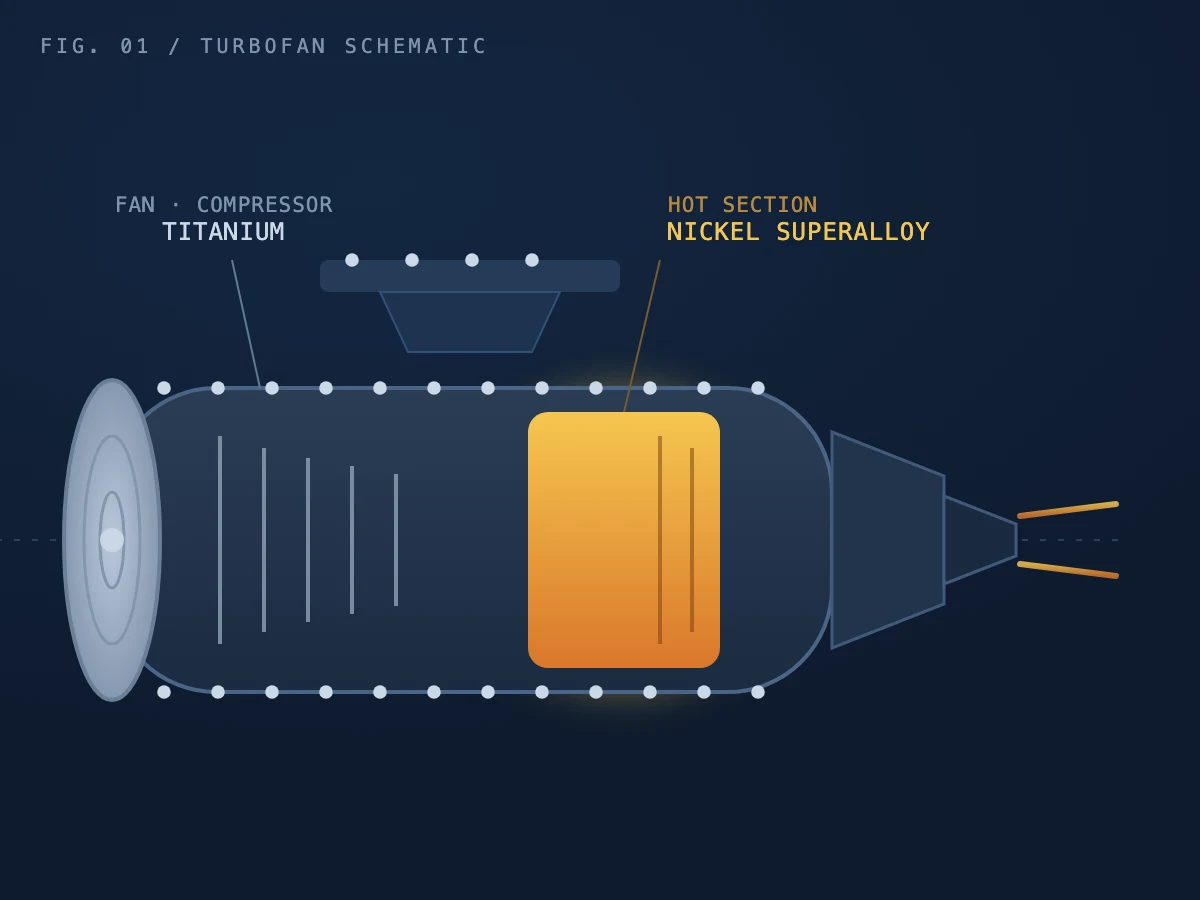
What Engine Programs Are Waiting On
In aerospace and defense, the engine is usually the part everyone is waiting on. Here is what goes into it, and why the schedule is the hard part.
Read More
Large OEMs Extend Long-Term Agreements with Manufacturers
In September 2025, STS Metals and Boeing announced an extended long-term supply agreement covering titanium rod, bar, and plate. That kind of agreement doesn't happen by accident.
Read More